
The Scale-Up Paradox: How Modern Leadership Styles Can Stifle Growth
 Trevor Hudson
21 August 2026
Trevor Hudson
21 August 2026
Building a company is exhilarating. Whether you are disrupting industries through personalisation and AI, or simply growing a new venture from the ground up, you are contributing to a changing world. As a leadership team, you have built something from nothing through sheer force of will, which is a feat very few can claim.
However, in my work with many scale-up leaders, I have noticed a recurring pattern. No matter how innovative your product is, you may find yourself struggling to build the actual company. Most senior teams want to build a unique, "progressive" culture as a response to their negative corporate experiences. Yet, according to the authors of The Science of Scaling, 61% of CEOs who grew beyond £1m in revenue felt the leadership team had become the primary bottleneck. We all have views on culture, but there is no reason you should automatically know how to architect a human system. It is simply not your primary expertise.
The "Permission" Bottleneck
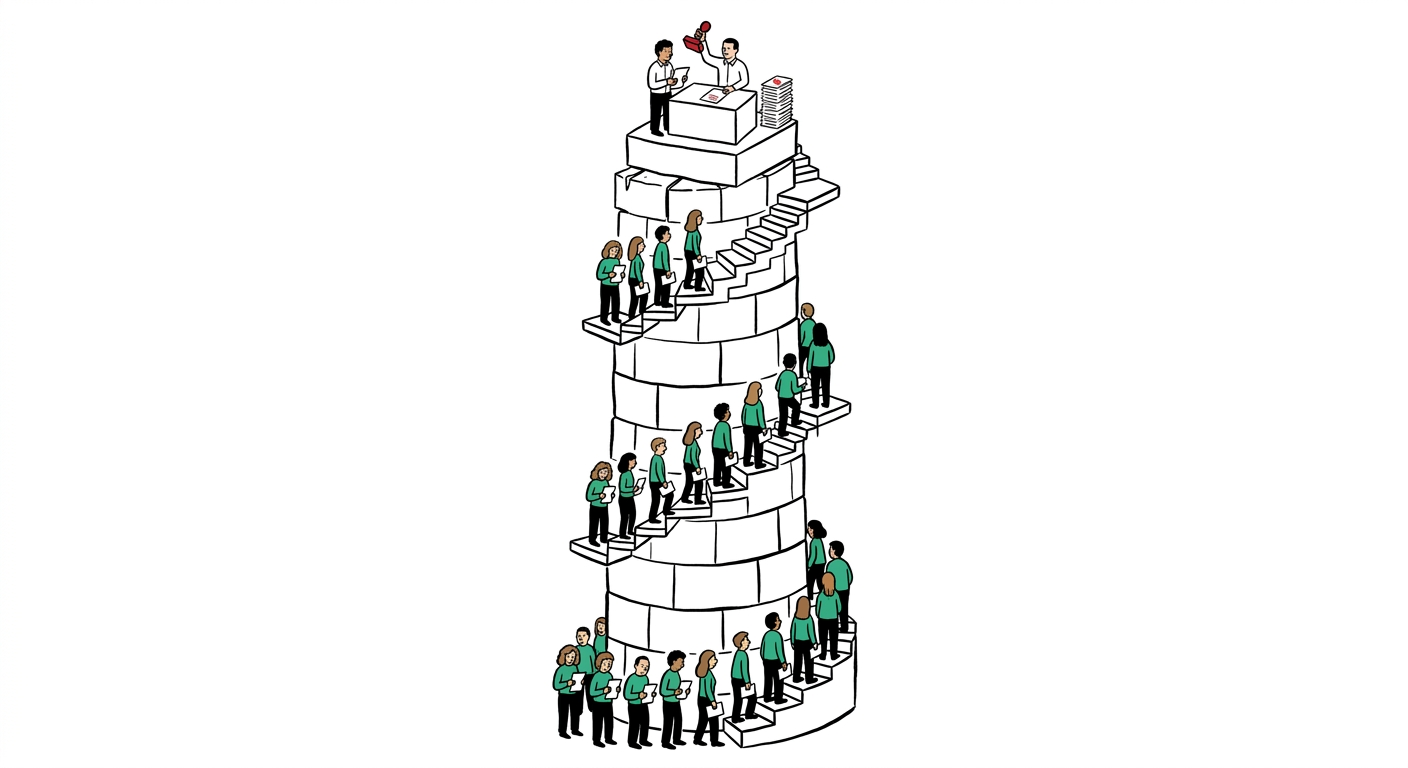
The root of nearly all scalability problems is the same: the leadership team is still deciding for everyone else. When that happens, the feedback loops you need to iterate rapidly, both for the work and your ways of working, stop being efficient.
You likely formed your vision of a "good" company from the pain of past mismanagement. You tell yourselves that your people need freedom, that you will avoid "politics," or that a flat organisation is the only way to stay agile. But if the C-suite clings to a rigid vision of how everything "must" be done, the business will never truly scale. You end up with an "innovative" company that, underneath the surface, is a classic parent-child culture. The leaders are the parents providing the answers, and the team are the children seeking approval.
Investors can sense this. They know that an overly controlling leadership team is a hindrance to growth. It is also why top talent leaves; experts quickly lose interest when they lack the agency to actually lead.
Upgrading Your Operating System (OS)
When growth feels sluggish, the natural instinct is to fix the friction by installing management "Apps," such as Agile, OKRs, or new Slack channels. These usually fail to make an impact because you are running them on an outdated Operating System.
The "Legacy OS" is built on drive, control, and the "Hero-Leader" model. It assumes the company operates the way you designed it in the org chart. In reality, companies evolve through your daily habits and your way of being with your team. If you are hiring senior managers for their "drive" rather than their ability to coach and collaborate, your modern organisation is being powered by very old thinking.
Many scaling leadership teams also quickly realise that they don’t really understand this culture stuff, or at least how to make it happen. They hand it over to an HR person, and the most senior HR person was primarily brought in to recruit people quickly - they don’t have all the answers either.
Many of your senior experts are in leadership roles because they have been there longer and may have helped shape the bones of the company. Their version of leadership is often ‘expert first, leader second’. It's well-intentioned, but it is also holding back the company (and annoying the brilliant people they hire).
The New OS
To build something genuinely progressive, you cannot take lessons from existing corporate models. You have to find a new way. The new OS has specific, high-performance features:
Context over Control: Instead of giving orders, you provide the full picture so your team can make their own decisions.
Safe-to-Fail Loops: You shift from preventing mistakes to building a system that learns from them quickly.
Tackling people issues fast: You build an organisation that solves people issues as quickly as it fixes critical bugs in your website. Bravely tackling bad behaviour and unproductive team dynamics is everyone's job.
Adult-to-Adult Dynamics: You stop being the "source of truth" and start being the team that asks the most challenging questions.
Distributed Authority: Decisions are made where the information lives, not where the most expensive person sits.
Sounds good, but many scale-ups fail at building this too, not through lack of effort but because knowing it is very different from being it - no matter how smart you are.
Presence Over Process
Scaling requires you to move away from the leadership team being the "Chief Problem Solvers" and instead embody a role that amplifies the brilliance of the people around you.
"The stronger the culture, the less corporate process a company needs. When the culture is strong, you can trust everyone to do the right thing. People can be independent and autonomous." — Brian Chesky, Co-founder & CEO of Airbnb
The best thing you can do as a leadership team is decide on a few core principles and then obsess over involving everyone in living them. This means cultivating leadership in others, which feels alien when you were initially successful by "knowing" and "doing." It requires a shift in how you show up. It is not just about what you do, but who you are in the room: the people who create the clarity that makes control unnecessary.
"The concept of empowering people has become a common saying, but the necessity for it arises because their power has been taken away... I realised my role was not to enforce policies, but to help teach every employee how the business worked so they could use their own judgment." - Patty McCord, Former Netflix Chief Talent Officer
While your core principles of work may be completely unique to you, what isn’t unique is that they will not come to life with an out-of-date OS and leadership. It just means that, rather than taking those principles and embodying them, they keep looking upward for interpretation.
And let's be honest: without clear evidence that letting go of the reins works, it is extremely hard, as a leader, to do so.
The Result of Your Upgrade
When you actually upgrade your leadership OS, you stop "taking" accountability and start "leaving space" for it to grow. The benefits are immediate:
Speed: Decisions happen in minutes, not after a weekly senior management meeting.
Accountability: Your team feels it is their job to protect the company, rather than just "completing tasks."
Expertise: You finally engage your experts' "whole brain" because they have stopped looking up for permission.
Ownership: You remove the inertia that keeps others from stepping up as the business grows.
The very things that make your startup great—the agility and the drive—are exactly what you risk losing during growth. The paradox is that trying to force these things to happen is exactly what kills them. To truly scale, you do not need to lead more; you need to be the leadership team that builds a system that can eventually lead itself.